
Beyond glass jars
Glass jars are the old standard, but they aren't perfect. Light, air, and heat are constant threats that strip away potency and ruin the flavor of good flower. If you're spending money on top-shelf buds, a basic Mason jar is eventually going to let you down.
The demand for quality cannabis is steadily increasing, and with it, a desire for storage solutions that match. Discretion is also a major factor, as legalization expands but social stigmas persist. Simple jars don’t always address these needs. We’re seeing a shift toward more sophisticated options, and it’s being driven by technology.
What was once a simple matter of finding an airtight container is now evolving into a science. New materials, sealing technologies, and even integrated sensors are entering the market, offering unprecedented control over the storage environment. These 'smart' containers aren’t just about keeping your cannabis hidden; they're about actively preserving its quality and maximizing your investment.
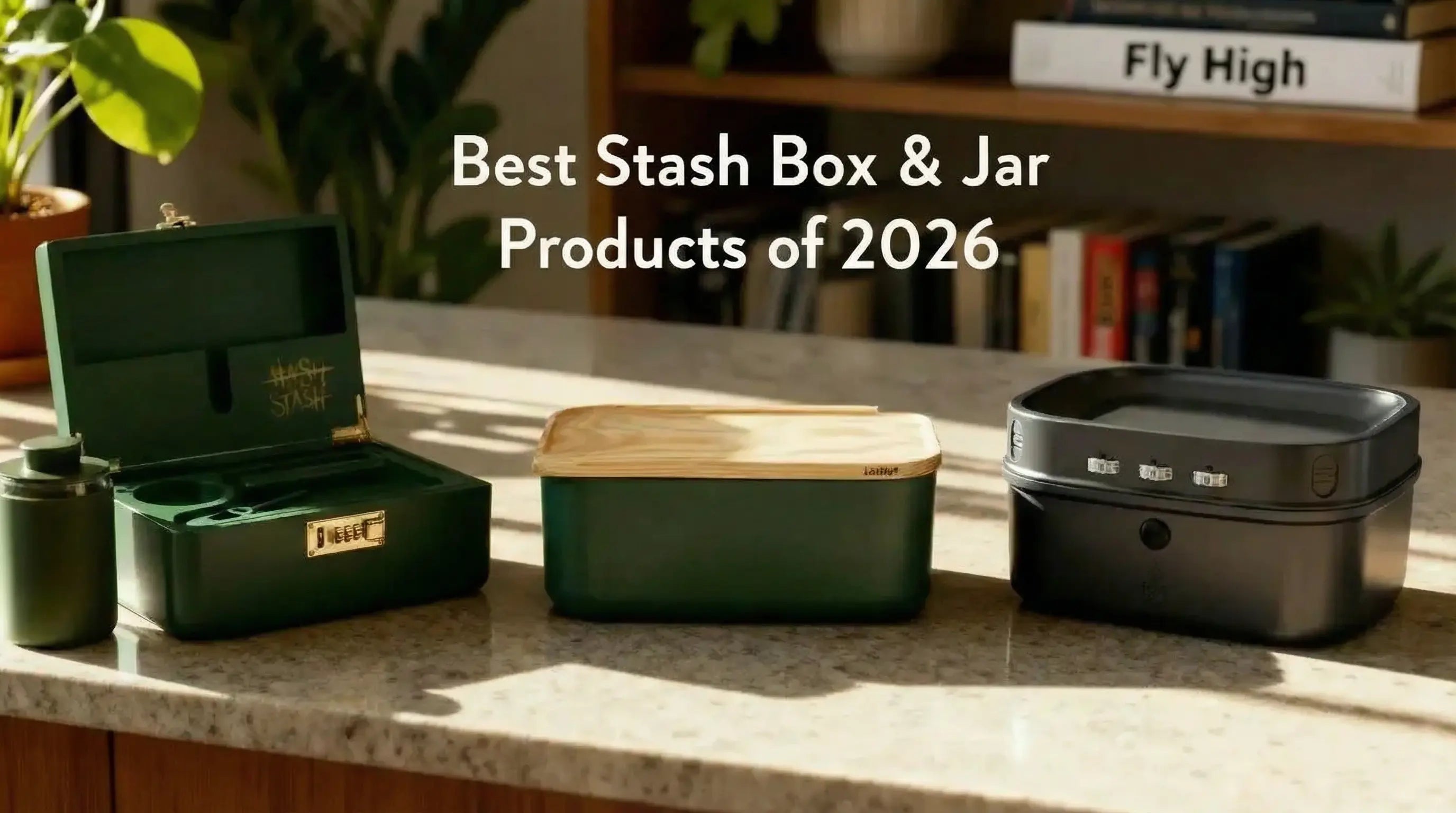
Seven containers to keep herb fresh
The market for cannabis storage is rapidly expanding. Here’s a look at seven containers that stand out in 2026, each offering a unique approach to herb preservation. Prices are approximate and based on current trends, subject to change.
Stashlogix Everest 300 Case ($120 - $180): Stashlogix has been a mainstay in discreet storage for years. The Everest 300 features a rigid exterior, a combination lock, and a carbon filter to neutralize odors. It's not necessarily focused on preserving terpenes, but excels in portability and security. The downside is its bulkiness; it's not ideal for smaller quantities.
Smokecartel Cali Case ($60 - $90): Smokecartel's offering prioritizes smell-proof technology with a durable, zippered design and activated carbon lining. It’s a solid, affordable option for travel and daily use, but lacks advanced preservation features. I find the build quality to be surprisingly robust for the price point.
Tulip Pop Top ($40 - $60): Tulip containers use a unique, modular design with silicone seals. These are known for their airtightness and stackability. The Pop Top is particularly good for short-term storage and maintaining consistent humidity, but doesn’t offer UV protection. They've really nailed the aesthetic with these containers, too.
AirTight Preserve Jar ($30 - $50): This jar isn’t your grandmother’s canning jar. AirTight Preserve Jars are constructed from borosilicate glass and feature a robust, multi-point locking lid with a silicone gasket. They offer excellent airtightness and decent UV protection, making them a good all-around choice. They're a bit heavier than standard jars.
Form Factor Nimbus ($80 - $120): Form Factor takes a more tech-focused approach. The Nimbus container includes a built-in humidity sensor and a companion app that monitors conditions and alerts you when it’s time to replace the desiccant pack. It’s a significant step up in terms of control, but adds complexity and relies on battery power.
CannabisKeeper CK1000 ($150 - $200): The CannabisKeeper is a vacuum-sealed container designed for long-term preservation. It comes with a hand pump to remove air, creating a near-oxygen-free environment. While effective, the vacuum sealing process requires more effort than simply closing a lid. It’s best suited for storing larger quantities for extended periods.
Airovic Smart Jar ($90 - $140): Airovic integrates temperature and humidity sensors directly into a UV-resistant glass jar. Data is transmitted via Bluetooth to a mobile app, providing real-time monitoring. The app also offers recommendations for optimal storage conditions. The battery life is a concern, with users reporting needing to charge it every few weeks.
Smart Cannabis Storage Containers - 2026 Comparison
| Price Range (USD) | Material | Sealing Type | UV Protection Level | Smart Features | Best For |
|---|---|---|---|---|---|
| $20 - $40 | Borosilicate Glass | Airtight Lid with Silicone Seal | Low | No | Everyday Storage |
| $30 - $60 | Aluminum | Screw-Top Lid with O-Ring | Medium | No | Travel |
| $50 - $80 | Stainless Steel | Combination Lock & Airtight Seal | Medium | No | Discreet Storage |
| $70 - $120 | Polypropylene Plastic | Humidity Control Pack Integration & Airtight Seal | Low | Yes | Long-Term Storage |
| $40 - $70 | Walnut Wood | Friction-Fit Lid with Internal Seal | Low | No | Home Display/Small Quantities |
| $60 - $100 | Aluminum with UV Glass Insert | Airtight Screw Cap | High | No | Light Sensitive Strains |
| $80 - $150 | ABS Plastic & Silicone | Electronic Lock & Integrated Humidity Sensor | Medium | Yes | Security & Monitoring |
Illustrative comparison based on the article research brief. Verify current pricing, limits, and product details in the official docs before relying on it.
The fight against oxygen
Air exposure is arguably the biggest enemy of preserved cannabis. Oxygen degrades cannabinoids like THC and CBD, converting them into less potent forms. It also oxidizes terpenes, diminishing aroma and flavor. An airtight seal is therefore the first line of defense. But 'airtight' isn’t always what it seems.
Different sealing technologies offer varying levels of effectiveness. Silicone gaskets provide a flexible, reliable seal, but their performance can degrade over time. Locking mechanisms, like those found on the Stashlogix cases, offer a more secure closure. Vacuum sealing, as utilized by the CannabisKeeper, is the most effective method, removing almost all air from the container.
To test the effectiveness of a seal, a simple water test can be performed. Fill the container with water, seal it tightly, and invert it. Any leaks indicate a compromised seal. Desiccant packs, typically containing silica gel, play a crucial role in maintaining low humidity levels within the container. They absorb excess moisture, preventing mold and mildew growth. They work best in conjunction with an airtight seal, as they can only remove moisture that isn’t constantly being replenished from the air.
Light and materials
Ultraviolet (UV) light is another significant threat to cannabis quality. UV radiation breaks down cannabinoids and terpenes, leading to potency loss and flavor degradation. Exposure to light, even indirect sunlight, can have a noticeable impact over time. Choosing the right container material is essential for mitigating this risk.
Glass offers some UV protection, particularly darker-colored glass like amber or blue. Amber glass blocks a significant portion of UV rays, while clear glass offers minimal protection. Metal containers, like stainless steel, are completely opaque and provide excellent UV protection. Plastics vary widely in their UV-blocking capabilities; some are highly transparent, while others incorporate UV inhibitors.
UV-blocking coatings and tints can be applied to both glass and plastic containers to further enhance protection. The color of the glass also plays a role. Amber glass blocks a broader spectrum of UV light than green glass. It’s important to note that even with UV protection, prolonged exposure to any light source should be avoided.
The reality of smart jars
The integration of technology into cannabis storage is a relatively new development, but it’s gaining momentum. Smart containers like the Form Factor Nimbus and Airovic Smart Jar offer features like humidity and temperature monitoring, app connectivity, and automatic alerts. These features provide unprecedented control over the storage environment, but come with trade-offs.
Getting a notification when your humidity drops is helpful, but these jars are expensive and high-maintenance. I've found that charging a jar every two weeks is a chore most people will eventually quit doing. There is also the weird reality of having your smoking habits tracked in a cloud database, which feels unnecessary for a plant.
Looking ahead, we could see even greater integration with dispensary apps, allowing for personalized storage recommendations based on the specific strain and desired preservation timeframe. Automated humidity control systems, powered by small, efficient pumps, are also a possibility. The challenge will be balancing technological innovation with user simplicity and data security.
- Download the companion app.
- Calibrate the sensors (if required).
- Monitor humidity and temperature levels.
- Receive alerts and adjust storage conditions as needed.
Storing for the long haul
For long-term storage – months or even years – more advanced techniques are required. Vacuum sealing, as offered by the CannabisKeeper, is highly effective at removing oxygen and preventing degradation. Nitrogen flushing, which replaces the air inside the container with an inert gas, is another option, though less common for home users.
Optimal temperature and humidity conditions are also crucial. Store cannabis in a cool, dark, and dry place, ideally between 55-65°F (13-18°C) and 50-60% relative humidity. Proper curing is essential for long-term preservation. Curing involves slowly drying and aging the cannabis, which enhances its flavor and potency.
The impact of storage on different cannabis products varies. Flower is most susceptible to degradation, while concentrates and edibles tend to be more stable. However, even concentrates can lose potency and flavor over time if not stored properly. Investing in high-quality storage solutions is a worthwhile investment for anyone serious about preserving the quality of their cannabis.
No comments yet. Be the first to share your thoughts!